

 7-Aug-26 6 min. read
How Much Does Car Shipping Cost?
Explore current car shipping costs and learn how distance, vehicle type, transport method, and timing can affect the final price.
Read our cost guide Proudly American

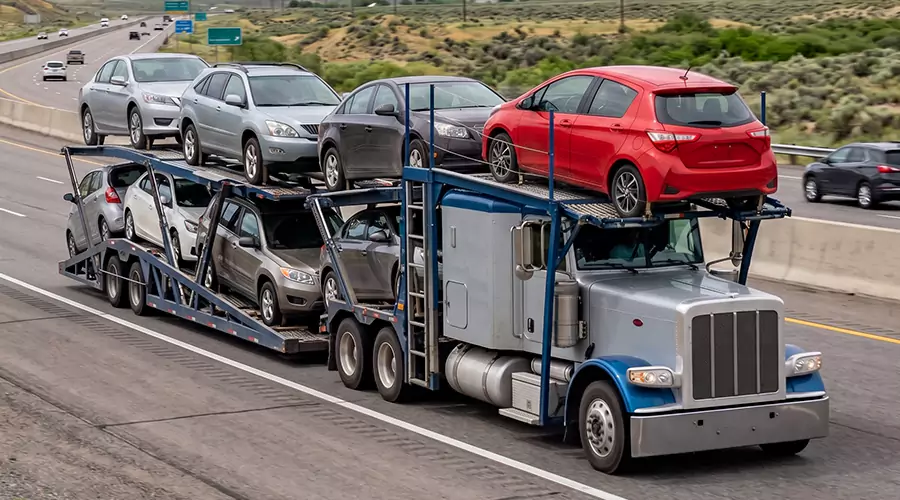
Car shipping cost usually falls between $500 and $1,700 for a domestic move in 2026. A standard open-carrier shipment often lands near $1,000. Longer routes raise the total bill even though the price per mile usually drops.
The average cost to ship a car changes with distance and trailer type. Vehicle size also affects the final number. A short route can exceed $2 per mile while a long route can fall below $1 per mile.
A low estimate can look attractive at first. Yet missing fees or weak route coverage can push the final payment hundreds of dollars higher. Understanding each price factor helps you set a realistic budget before pickup and choose car shipping services that provide clear, upfront pricing.
Most domestic shipments cost $600 to $1,400 on an open trailer. This range covers common routes between 500 and 2,000 miles. Enclosed transport often adds 30% to 60%. Short trips cost more per mile because loading and scheduling expenses are spread across fewer miles.
| Shipping distance | Open transport estimate | Enclosed transport estimate | Typical open rate |
|---|---|---|---|
| About 500 miles | $600 to $700 | $850 to $1,000 | $1.20 to $1.40 per mile |
| About 1,000 miles | $650 to $800 | $1,000 to $1,200 | $0.65 to $0.80 per mile |
| About 2,000 miles | $1,200 to $1,400 | $1,700 to $2,000 | $0.60 to $0.70 per mile |
These 2026 ranges assume an operable standard sedan on a common interstate route. The shipping vehicle cost can rise when the pickup point is far from a major lane. A tight delivery window can also reduce the number of available trucks.
Car transport rates do not rise in a straight line with mileage. A 2,000-mile move costs more in total than a 500-mile move. Still, the longer shipment often has a lower rate for each mile because fixed handling work is spread across a longer trip.
An insider tip is to compare the total and the rate per mile. A higher total does not always mean the offer is overpriced. The route may simply be longer or harder to serve.
Pricing depend on how easily a transport truck can add the pickup to an active route. Interstate access often lowers repositioning time. Rural mileage or restricted streets can raise it. Seasonal traffic can also change the balance between available vehicles and open trailer space.
Four local conditions matter most:
The location field should not be treated as a flat city surcharge. Two addresses in the same market can receive different prices because one sits near a truck route while the other requires extra travel.
Compare that figure with the national distance range before judging whether a price is high. A major difference should have a clear cause such as enclosed service or remote access.
Distance changes both the total price and the price per mile. A short shipment has a high per-mile rate because pickup work stays almost the same. A cross-country move has a larger total yet spreads those fixed tasks over far more highway miles.
The phrase cost to ship car across country usually refers to a route of 2,000 miles or more. Open transport for that distance often starts near $1,200. It can reach $2,500 on harder routes.
Shipping car across country can take about 7 to 15 days in transit. Weather or extra stops can extend that window. A faster pickup request can raise the price because the shipment must match a smaller pool of trucks.
The price to ship car across country also changes by direction. A lane with strong demand in one direction can cost more when the return route has fewer vehicles. This imbalance affects how easily a truck can remain full.
A cost to ship car to another state estimate can be lower than a coast-to-coast move. Yet a short rural route can still have a high per-mile rate. The driver must spend time reaching the pickup even when the loaded distance is modest.
The counterintuitive point is simple. More miles do not always mean a worse value. Long moves often buy each mile at a lower rate.
The final price reflects trailer choice and vehicle condition. Route demand also changes the number. Summer demand often raises rates while flexible dates can reduce them. Large vehicles take more trailer space. A vehicle that cannot move under its own power needs extra loading equipment.
Open transport works for most daily-use vehicles. It carries more cars per trip and has wider availability. Enclosed service protects the vehicle from weather and road debris. That protection often adds 30% to 60% to the same route.
The enclosed car transport cost makes the most sense for a rare or high-value vehicle. The enclosed auto transport cost may also be justified for low ground clearance. Limited trailer space is the main reason this service stays higher.
A large SUV or pickup uses more deck space than a sedan. Full-size trucks can cost roughly 35% to 40% more on the same route. An inoperable vehicle can add about $150 to $300 because loading requires a winch and more handling time.
Non running car transport must be disclosed before pricing. A car that rolls but does not steer can require different equipment than a car with a dead battery. Accurate condition details reduce the chance of a pickup-day increase.
Summer often brings stronger moving demand. Late booking can also narrow truck availability. Expedited car shipping carries a higher price because the pickup must happen within a tighter window. Flexible dates give the route planner more combinations.
Door to door car shipping is convenient when a large trailer can reach both addresses. A safe nearby parking lot may be used when local streets cannot support the truck. Terminal service can be cheaper but storage fees can erase the saving.
You can build a useful estimate by multiplying route miles by the matching 2026 rate. Then adjust for trailer type and vehicle size. Add a handling allowance for an inoperable car. This method will not replace a live market price but it will expose unrealistic numbers.
Use this five-step check:
As an example a 1,000-mile open shipment may use a $0.80 rate. That gives an $800 baseline.
Your estimate should use road mileage rather than a straight line. It should also reflect the actual vehicle condition. A small error in either input can distort the result.
The total should be compared across the same service level. Do not compare an open flexible-window price with an enclosed fixed-date price. Those offers solve different needs.
A risky quote often hides behind a price far below the market range. Other warning signs include missing registration details or unclear payment terms. Federal guidance says interstate auto brokers and carriers must be registered. Consumers can verify authority and insurance records before releasing a vehicle.
Check these nine warning signs:
Written offers should describe the origin and destination. They should also state the vehicle details and trailer type. Car shipping quotes online can be useful for comparison but an automated number is still a market estimate.
An instant car shipping quote should not be treated as final when the shipment details are incomplete. A car transport quote online can change when the actual carrier reviews the route. Some 2026 quote tools keep prices valid for only 24 to 48 hours because fuel costs and capacity change quickly.
The insider tip is to verify the company record through the federal database. Search results and polished websites can be copied by scammers. FMCSA advises checking the legal identity and contact details through official records.
Professional help becomes useful when the vehicle is inoperable or the route has difficult access. It also matters when enclosed equipment is required. A qualified broker can search a wider carrier network. A direct carrier can confirm the truck and driver assigned to the move.
Call before booking when the car has low clearance or cannot brake. You should also ask for help when pickup requires a port or gated facility. These conditions can change equipment needs.
Auto transport brokers arrange the shipment but do not drive the truck. Auto transport carriers not brokers own or operate the transport equipment. Federal registration records help you confirm which role a company holds.
A professional should verify trailer clearance and loading equipment. The written order should also match the bill of lading at pickup. Stop the handoff when the carrier name or price does not match the agreement.
Most avoidable charges come from late changes or missing vehicle details. Prevent them by confirming the route early. Report the exact operating condition. Review the written amount again before loading. Planning costs nothing while an inoperable vehicle can add $150 to $300.
Use this schedule:
The cheapest way to ship a car cross country is usually open transport with flexible dates. Terminal service can reduce delivery work in some markets. Yet storage fees may make a nearby door pickup cheaper overall.
Keep the vehicle description accurate until pickup. A roof rack or oversized tire can change loaded dimensions. Small details matter because trailer capacity is sold by weight and space.
Car shipping cost is easiest to judge when you compare distance and trailer type. A realistic 2026 budget is usually $500 to $1,700 with higher totals for enclosed or difficult moves. Professional guidance helps when access or vehicle condition changes the equipment. This week, calculate your route mileage and compare three matching estimates before choosing a final shipment date.
7-Aug-26 6 min. read
Explore current car shipping costs and learn how distance, vehicle type, transport method, and timing can affect the final price.
Read our cost guideNeed Help?
One call solves it all.